


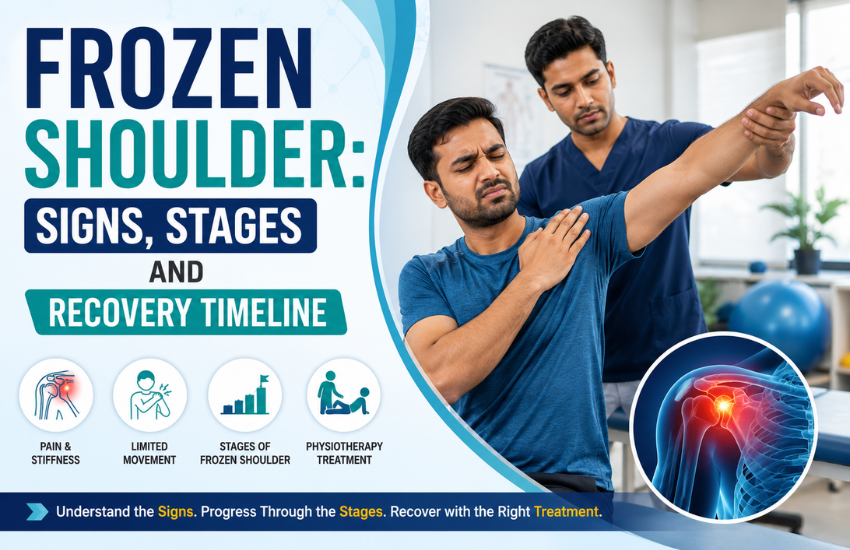
Frozen Shoulder, medically known as Adhesive Capsulitis, is a condition that causes pain, stiffness, and limited movement in the shoulder joint. It develops gradually and can significantly affect daily activities such as reaching overhead, dressing, driving, or even sleeping comfortably. Understanding the signs, stages, and treatment options can help individuals seek timely care and achieve a faster recovery.
What is Frozen Shoulder?
Frozen Shoulder occurs when the capsule surrounding the shoulder joint becomes inflamed and thickened, leading to restricted movement and pain. The exact cause is not always known, but it is more common in people aged 40 to 60 years, especially women. Individuals with diabetes, thyroid disorders, prolonged shoulder immobilization, or recent shoulder injuries are at a higher risk of developing the condition.
Common Signs and Symptoms
Frozen Shoulder typically begins with mild discomfort that gradually worsens over time. Common symptoms include:
- Persistent shoulder pain
- Stiffness and reduced range of motion
- Difficulty lifting the arm
- Pain while sleeping on the affected side
- Trouble performing daily activities
- Gradual loss of shoulder mobility
The severity of symptoms varies depending on the stage of the condition.
The Three Stages of Frozen Shoulder
Stage 1: Freezing Stage
This is the initial stage where pain gradually increases and shoulder movement becomes more difficult.
Duration: 6 weeks to 9 months
Symptoms include:
- Increasing shoulder pain
- Pain during movement and at rest
- Gradual loss of flexibility
Stage 2: Frozen Stage
Pain may begin to decrease, but stiffness becomes more severe.
Duration: 4 to 12 months
Symptoms include:
- Significant restriction of movement
- Difficulty performing routine activities
- Reduced shoulder function
Stage 3: Thawing Stage
During this stage, shoulder mobility slowly improves.
Duration: 6 months to 2 years
Symptoms include:
- Gradual return of movement
- Reduced stiffness
- Improved shoulder function
How Physiotherapy Helps in Frozen Shoulder Treatment
Physiotherapy is considered one of the most effective treatments for Frozen Shoulder. A physiotherapist develops a personalized rehabilitation program to reduce pain, restore mobility, and improve shoulder strength.
Treatment may include:
- Shoulder mobility exercises
- Stretching programs
- Joint mobilization techniques
- Postural correction
- Strengthening exercises
- Pain management therapies
- Home exercise guidance
Early intervention can significantly improve recovery outcomes and help prevent long-term stiffness.
Recovery Timeline
The recovery timeline for Frozen Shoulder varies from person to person. Mild cases may improve within several months, while more severe cases can take one to two years for full recovery. Consistent physiotherapy, regular exercises, and adherence to treatment recommendations play a crucial role in accelerating recovery.
Tips for Faster Recovery
- Follow your physiotherapy program consistently
- Perform prescribed exercises daily
- Avoid prolonged shoulder immobilization
- Maintain good posture
- Seek treatment early when symptoms appear
Conclusion
Frozen Shoulder can be frustrating and limiting, but with the right treatment approach, most individuals regain significant shoulder function and return to normal activities. Early diagnosis and physiotherapy are key to reducing pain, restoring movement, and shortening recovery time. If you’re experiencing persistent shoulder stiffness or pain, consult the experts at Mobility For Wellness for a comprehensive assessment and personalized treatment plan.
